Taskers Workshops
What Students Learn
Real Businesses. Real Responsibility. Real Experience.
Community Taskers is not a gig platform. It is a community-based startup incubator where students learn by building and running real service businesses that serve their neighbors. Students don’t simulate entrepreneurship—they practice it.
Students apply for leadership or associate roles within each Community Taskers startup and are selected through a structured interview process. Once onboard, they participate in an integrated program that blends hands-on operations, business strategy, leadership development, and financial literacy.


Data-Driven Decision Making
Learning to Read the Business
Community Taskers introduces students to the same tools used by modern entrepreneurs and small-business owners.
Through Strategy Workshops, students gain hands-on experience with platforms such as QuickBooks and Google Analytics, learning how to:
-
Monitor bookings and demand trends
-
Understand revenue, costs, and profitability
-
Evaluate marketing performance
-
Make informed adjustments to pricing, availability, or promotions
Students learn how decisions impact outcomes—and how to course-correct using real data.
Leadership & Teamwork
Building People, Not Just Businesses
Leadership is embedded at every level of Community Taskers.
Student Leaders:
-
Oversee startup teams
-
Participate in peer interviews and onboarding
-
Assign roles and responsibilities
-
Support teammates through challenges
They learn how to set expectations, motivate peers, manage conflict, and lead with accountability—skills that translate directly to college, internships, and future careers.
Students who prefer a hands-on role can participate as Associates while still gaining exposure to professional standards and teamwork.
Hands‑On Operations Training
Running a Business in the Real World
Through weekly Taskers Operations Workshops, students manage the real logistics of operating a local service business, including:
-
Scheduling and availability management
-
Customer communication and professionalism
-
Service delivery and quality control
-
Day-to-day troubleshooting
These sessions are grounded in real situations—not hypotheticals.
Students work through real challenges such as last-minute cancellations, scheduling conflicts, supply issues, and client expectations.
They learn to adapt, communicate clearly, and deliver professional-quality service under real conditions.
Financial Literacy & Earnings
Learning by Earning
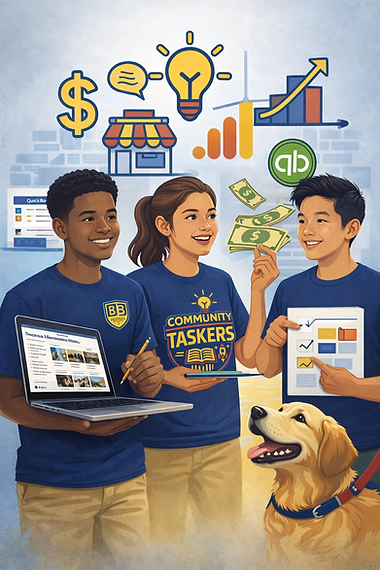
Students earn real income—typically ranging from $15 to $28 per hour, depending on the service—paid weekly through the platform. Tips go 100% to the students.
Earnings are paired with guidance on:
-
Budgeting and planning
-
Managing irregular income
-
Understanding service pricing
-
Professional responsibility
Students also receive structured feedback from families and Taskers mentors, helping them refine communication, reliability, and service quality. This support ensures the program remains safe, professional, and aligned with community expectations.
CTE & Career Readiness
Supporting Vocational Pathways
Community Taskers supports students pursuing career and technical education pathways such as cosmetology, barbering, and culinary arts.
When communities and schools choose to participate, Taskers can support supervised training enterprises that allow students to:
-
Earn state-accredited licensure hours
-
Provide services through their community’s Taskers platform
-
Apply entrepreneurial skills alongside technical training
Licensed instructors and approved facilities are required for these pathways. These partnerships are optional and implemented only where they benefit students.
Real-World Entrepreneurship for CTE Students
CTE students participate in the same entrepreneurial workshops as other Community Taskers participants, learning how to:
-
Attract and retain clients
-
Manage customer experience
-
Analyze marketing funnels and financial dashboards
-
Grow bookings and revenue sustainably
By pairing licensure progress with real business operations, students graduate with both technical credentials and practical business experience.
Pathways to Sustainable Careers
Many vocational pathways lead directly to living-wage careers.
Through Community Taskers, students gain:
-
Paid, supervised experience
-
Professional client relationships
-
Guidance on pricing, scheduling, and operations
-
Exposure to independent business ownership
In some communities, a portion of net revenue may support scholarships for licensing fees, tools, or equipment—reducing barriers to entry for students entering the workforce.

The Outcome
Students leave Community Taskers with:
-
Real income earned
-
Real businesses operated
-
Real experience gained
-
Real confidence built
They don’t just learn how work functions.
They learn how communities grow—and how they can lead that growth.